
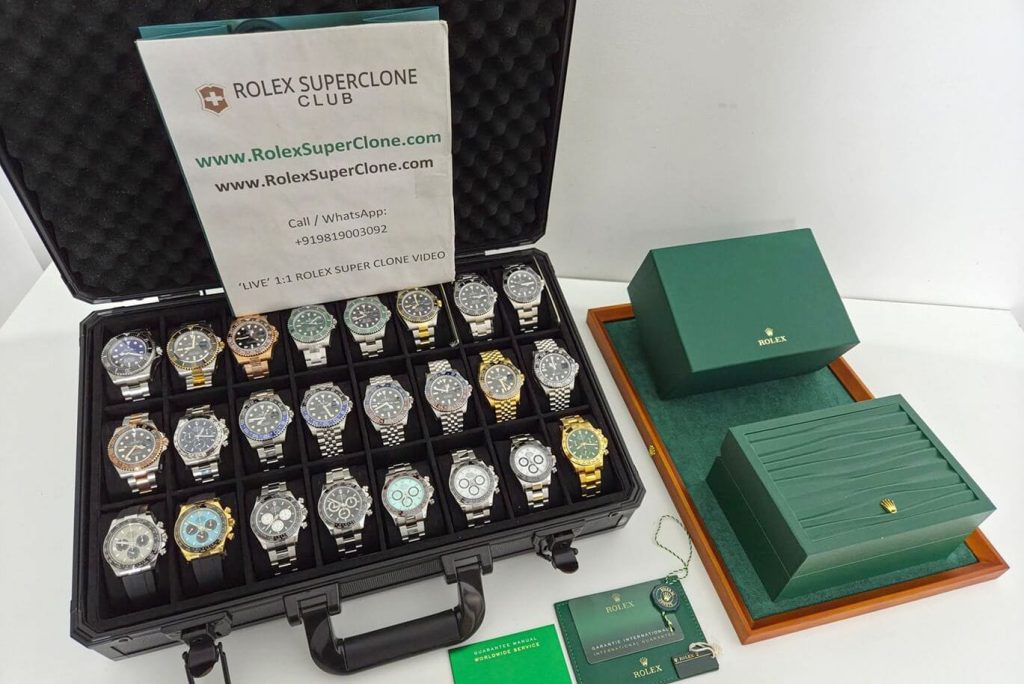
The term 1:1 Rolex replica watches is often used online to describe replica timepieces that are designed to look extremely similar to genuine Rolex models. Beginners may see phrases such as “1:1,” “super clone,” “high-quality replica,” or “Swiss movement” and assume that these labels guarantee a certain level of accuracy. In reality, these terms are not official Rolex quality grades. They are commonly used by sellers and replica communities to describe how closely a replica attempts to copy the appearance, dimensions, finishing, and movement of an authentic luxury watch. Understanding these terms is important because a watch can look convincing in photographs while still being very different from a genuine Rolex in materials, engineering, durability, and value.
For anyone researching a Rolex Super Clone or similar replica terminology, the best starting point is education rather than marketing claims. Rolex is known for its detailed manufacturing standards, proprietary technologies, quality control, and long-term service network. A replica attempts to reproduce some of the visible characteristics of that design without being an original product. This distinction affects everything from the movement and case construction to water resistance and resale value. A careful reader should therefore treat claims about “1:1” accuracy as descriptions used within the replica market rather than as independent certifications.
What Does 1:1 Mean in Replica Watch Terminology?
In replica watch terminology, “1:1” generally suggests that a manufacturer has attempted to make a watch closely resemble a particular genuine model. This can include the case proportions, dial layout, bezel appearance, bracelet shape, crown position, hands, and other visual details. Some replicas 1:1 rolex replica watches are produced with attention to small design elements that casual observers may not notice. However, there is no universal testing organization that awards a watch an official “1:1” certification. Two products advertised with the same term can therefore have very different levels of construction and accuracy.
The phrase can also create confusion for new buyers because visual similarity does not equal identical engineering. Genuine Rolex watches involve extensive research, manufacturing controls, testing, and finishing processes. A replica may copy the outward design while using a completely different movement, metal, crystal, or manufacturing process. This is particularly important when reading descriptions of Rolex Super Clone watches, because promotional language can make technical claims sound more authoritative than they really are. Checking independent information and understanding watch components provides a much more reliable foundation than simply trusting a label.
How Replica Watches Try to Copy Genuine Rolex Designs
The most noticeable feature of a replica is usually its external appearance. Manufacturers may study popular Rolex models and reproduce recognizable characteristics such as the Oyster-style case, bracelet design, fluted or smooth bezel appearance, dial markers, date window, and overall proportions. Better-made replicas may pay close attention to details that affect how 1:1 rolex replica watches a watch looks from different angles. These details can include the spacing of dial elements, the shape of hands, the alignment of markings, and the relationship between the case and bracelet.
However, small differences can still exist even when a replica looks convincing at first glance. Genuine luxury watches are designed as complete mechanical systems rather than simply as visual objects. The movement must work with the case, crown, hands, date mechanism, and other components as a coordinated system. Crystal properties, machining tolerances, bracelet construction, and finishing can also vary considerably. This is why photographs alone are not enough to establish authenticity or engineering quality. A watch that resembles a particular Rolex model should not automatically be represented as an authentic Rolex or as an officially approved product.
Movements, Materials, and Construction Quality
The movement is one of the biggest differences between genuine Rolex watches and replicas. Authentic Rolex watches use proprietary mechanical movements developed and manufactured under Rolex’s strict standards. Replica watches may use movements produced by different manufacturers, with differences in architecture, finishing, accuracy, power reserve, serviceability, and reliability. Some replica movements may visually imitate certain characteristics of an original movement, but this does not make them equivalent to the genuine mechanism.
Materials and construction also deserve careful attention. Terms such as sapphire crystal, stainless steel, ceramic bezel, or automatic movement can describe individual components without proving that the entire watch meets the standards of an authentic Rolex. Water resistance is another area where caution is especially important. A genuine watch undergoes controlled testing, while a replica’s advertised resistance may not provide the same level of confidence. For this reason, owners should not assume that a replica is suitable for swimming, showering, or other activities simply because a listing makes a water-resistance claim.
Authenticity, Legal Concerns, and Common Scams
One of the most important lessons for beginners is the difference between a replica and an authentic Rolex. A replica becomes particularly problematic when it is represented as genuine or when counterfeit branding is used to deceive a buyer. Trademark and intellectual-property laws vary by country, but counterfeit products can create legal and financial risks. Buyers should understand these issues before making decisions based on online advertisements or social media promotions.
Scams are another major concern in the replica-watch market. Attractive photographs, dramatic claims about factory quality, and statements such as “identical to genuine” do not independently verify a product. Some websites may use terms like 1:1 Rolex replica watches or Rolex Super Clone to create an impression of exceptional quality without providing reliable evidence. New buyers should be especially careful with requests for unusual payment methods, pressure to make immediate purchases, missing return policies, or claims that a product is “officially authorized” when no such authorization can be verified. Learning to recognize these warning signs can prevent unnecessary financial loss.
Understanding Quality Claims Before Making a Decision
People researching replica watches often encounter several quality labels, including “super clone,” “1:1,” “top quality,” and “factory edition.” These terms can be useful for understanding how replica communities describe different products, but they should not be treated as standardized technical grades. There is no single industry-wide scale that guarantees that every watch carrying one of these labels has the same movement, materials, tolerances, or durability. This is why technical descriptions should always be evaluated carefully and separately.
A more useful approach is to understand what makes a mechanical watch reliable. Movement architecture, manufacturing precision, component quality, servicing requirements, case construction, crystal quality, bracelet finishing, and quality-control procedures all matter. Genuine Rolex watches also have established authentication and servicing systems that replicas cannot reproduce simply by copying their appearance. For readers interested in the Rolex Super Clone category, understanding these differences provides a clearer picture of what “high quality” can and cannot mean in the replica market.
Conclusion
Understanding 1:1 Rolex replica watches requires looking beyond attractive photographs and impressive-sounding labels. The term generally refers to a replica that attempts to closely copy a genuine Rolex model, but it is not an official Rolex classification or an independent quality certification. Differences can remain in the movement, materials, finishing, durability, water resistance, manufacturing standards, and long-term serviceability. A replica may imitate the appearance of a luxury watch while still being fundamentally different from the original product.
For beginners, knowledge is the strongest protection against misleading claims. Whether researching Rolex Super Clone terminology, mechanical watch movements, replica construction, or genuine Rolex authentication, it is important to separate marketing language from verifiable facts. Understanding how watches are engineered also makes it easier to recognize unrealistic promises and potential scams. Most importantly, a replica should never be presented as an authentic Rolex, and buyers should consider the legal, ethical, financial, and practical implications before making any decision.