
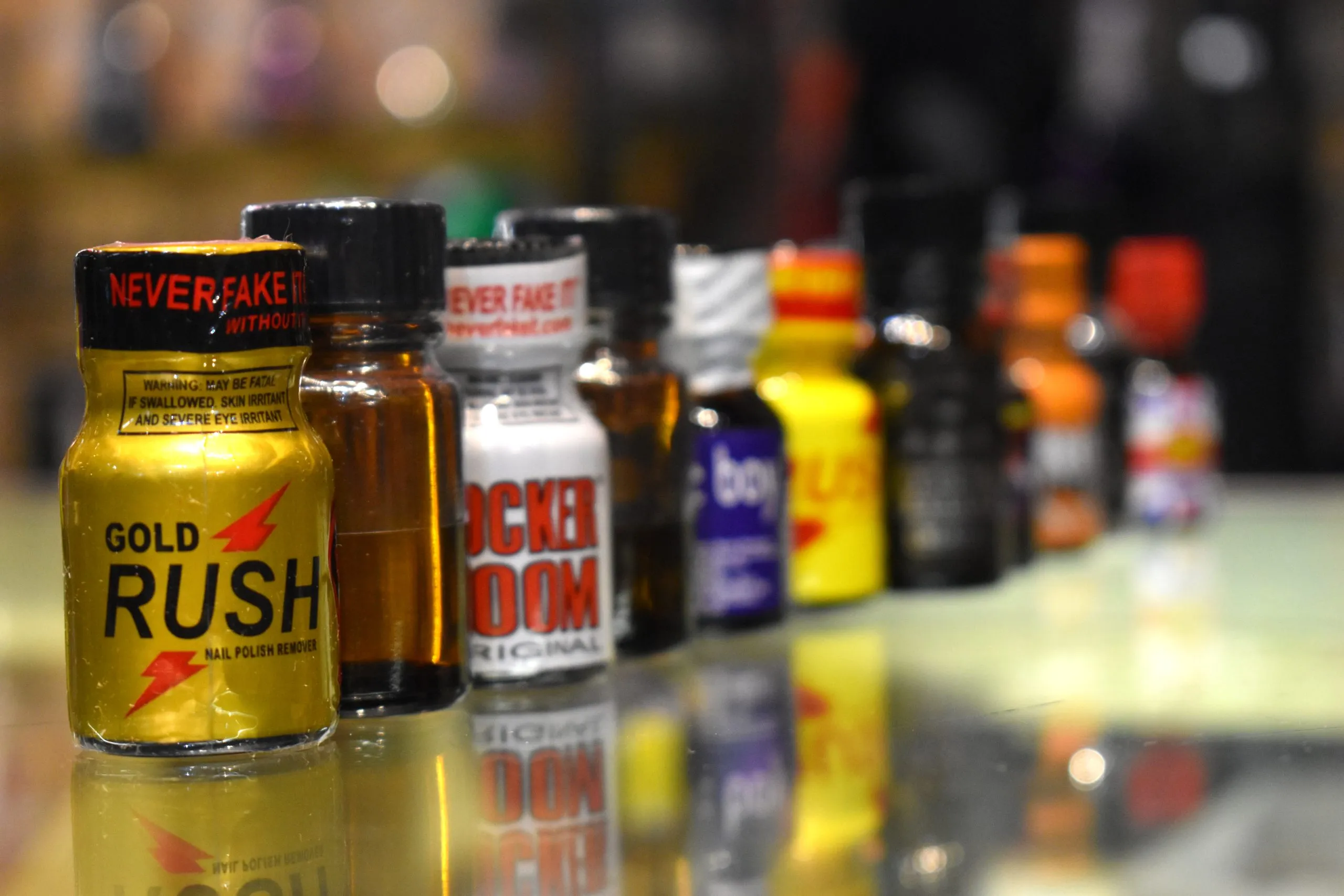
From the 19th Century to Today
Since their discovery in the 19th century, poppers have come a long way—from a revolutionary medical drug to an iconic substance in queer and gay culture. Originally used to treat heart conditions due to their blood vessel-dilating abilities, this compound has evolved in both use and perception over the years. Today, poppers are widely known for their euphoric and disinhibiting effects, becoming, for many, an integral part of social and body experiences. By exploring the full history of this fascinating product, we’ll uncover how it has endured and adapted to society’s changing needs. Want to learn more about the definition of poppers and their journey from the lab to the dance floor? Join us on this journey.
The Origin of Poppers: From Medicine to Recreation
Medical Beginnings
The history of poppers dates back to the 19th century when amyl nitrite was first synthesized in 1844 by French chemist Antoine-Jérôme Balard. Initially, the substance was used for medical purposes particularly for treating angina because of its ability to dilate blood vessels and improve blood circulation. At the time, poppers were seen as a major medical breakthrough and an innovative method for alleviating chest pain and improving vascular health.
The early medical use of poppers illustrates how substances can evolve and adapt to society’s changing needs. However, over time, further research revealed other effects of this compound. For more details on the discovery of poppers, we invite you to explore their fascinating history.
Transition to Recreational Use
By the 20th century, poppers began to move beyond their medical roots and became a recreational substance. During the 1970s, their popularity surged within the LGBT community, becoming a staple in nightlife culture. The euphoric and disinhibiting effects made poppers a go-to substance for those seeking to intensify their social and health experiences.
This shift toward recreational use was not without controversy. Social and legal perceptions of poppers have varied widely over time, shaped by cultural and political influences. Although initially stigmatized, acceptance has grown as more people have experienced their effects. Learn more about the origin of the name “popper” and how it shaped their story.
Today, poppers remain widely used, with a rich history spanning from medicine to pop culture—showcasing the compound’s adaptability and endurance.
Effects of Poppers on the Human Body
Desired and Sought-After Effects
The effects of poppers are both physical and emotional, offering a unique and intense experience. When inhaled, blood vessels dilate rapidly, causing an immediate increase in heart rate and drop in blood pressure. This generates feelings of pleasure and euphoria, along with relaxation of smooth muscles—especially in the anal and vaginal areas—intensifying body experiences.
Poppers can dissolve inhibitions and personal constraints, creating an environment conducive to exploring and gender. As Adam Zmith notes, their effect goes beyond pleasure: it’s about imagining new possibilities with our bodies and identities. This disinhibition, combined with increased body temperature and a sense of well-being, makes poppers a popular choice for social gatherings and celebrations.
Short- and Long-Term Consequences
While the sought-after effects are attractive, it’s essential to be aware of the short- and long-term risks. In the short term, users may experience dizziness, headaches, or a choking sensation due to decreased oxygen to the brain. These effects, though temporary, can be unpleasant and require caution.
Prolonged and excessive use of poppers may lead to more serious health issues. These include cardiac arrhythmias, cardiovascular depression, and possible liver or kidney toxicity. There is also a risk of neurological impairment, mucosal irritation, and facial dermatitis. Chronic use may lead to neurological damage, highlighting the importance of responsible and moderate consumption.
Understanding these effects is vital for ensuring a safe and enjoyable experience. Those wishing to benefit from poppers should prioritize quality and ensure compliance with European safety regulations.
Health Risks Linked to Poppers Use
Potential Damage and Precautions
Despite their popularity for euphoric effects, poppers are not without health risks. Continued use may cause neurological damage, affecting cognitive and motor functions. There are also documented cases of temporary visual disturbances. Ingesting the liquid is especially dangerous, potentially causing conditions like methemoglobinemia and hemolysis—especially in susceptible individuals.
To reduce these risks, it’s essential to follow specific precautions. Always inhale in a well-ventilated environment to avoid high vapor concentrations. Avoid using other recreational substances simultaneously, which can amplify adverse effects. Stay hydrated and listen to your body—if you experience severe dizziness or blurred vision, stop using immediately.
Medical Case Studies and Analysis
The health impact of poppers has been studied in various scientific works. A 2010 article by ophthalmologist Michel Paques in the New England Journal of Medicine documented cases of temporary vision changes linked to recreational popper use. Though rare, these cases highlight the need for informed and conscious consumption.
Medical literature also shows that in rare cases, poppers may trigger serious effects such as cardiovascular collapse, especially in individuals with autonomic nervous system disorders. Ongoing research helps improve our understanding, enabling consumers to make safer decisions.
Taking these scientific findings into account and adopting a responsible approach is essential for those who want to enjoy poppers without endangering their health. At poppers-espana.es, we are committed to offering high-quality products compliant with European standards for safe and enjoyable use.
New Trends and Uses of Poppers in Contemporary Society
Innovations in Packaging and Marketing
In the dynamic world of poppers, innovation continues to reinvent how this unique product is presented and marketed. To attract a younger and trend-savvy audience, brands now offer more stylish and functional packaging—enhancing both aesthetic and practical appeal. From precision-dosing bottles to labels featuring contemporary artwork, the industry keeps evolving with consumer tastes.
In addition to visual changes, marketing strategies have grown bolder. Brands focus on digital platforms and social media, where queer and gay influencers share their experiences and recommendations. This online presence not only boosts visibility but also builds a well-informed, connected community. At poppers-espana.es, we’re proud to be part of this revolution, offering a diverse catalog of top brands like Rush and Jungle Juice tailored to the needs and desires of our clients.
Social and Legal Perception of Poppers
The social perception of poppers has shifted significantly—from a taboo topic to an accepted product in many circles. This transformation is largely due to recognition of their role in LGBTQ+ culture as a form of expression and personal freedom. Influential voices like Adam Zmith have explored the sociocultural narrative of poppers, highlighting how this substance has served as a tool for exploring gender and health identity.
Legally, the status of poppers varies worldwide. In Europe, for instance, regulations ensure that products meet safety standards, enabling responsible consumption. However, debates continue regarding how best to regulate their use—especially in recreational contexts. At poppers-espana.es, we are committed to educating users about safe practices and ensuring every product complies with regulations for a secure and enjoyable experience.
Final Thoughts on the Future of Poppers
Debates on Regulation and Responsible Use
The future of poppers is closely tied to the evolving debate over regulation and responsible use. While some advocate for a more liberal approach—arguing that informed, safe use poses no significant public health threat—others call for stricter oversight to prevent abuse and ensure consumer safety.
British journalist Adam Zmith, in his book on popper history, encourages reflection on the fine line between recreational and clinical use, questioning the rigidity of current regulations. He suggests that, like many substances which transitioned from medical to recreational use, poppers would benefit from a regulatory framework that acknowledges both roles.
For a deeper understanding of how popper perception has evolved, it’s worth exploring how poppers were used in the 19th century.
Conclusion and Future Outlook
Looking ahead, the future of poppers lies in balancing innovation, regulation, and social perception. As regulations evolve to reflect more nuanced understandings of use, a new era may emerge—where safety and pleasure coexist. This approach would benefit both consumers and public health by reducing stigma and encouraging informed, responsible use.
At poppers-espana.es, we recognize the importance of this balance and are committed to offering products that meet the highest quality and safety standards. We believe that open dialogue and appropriate regulation are essential to ensure poppers remain a safe, accepted part of contemporary culture.